sábado, 30 de mayo de 2020

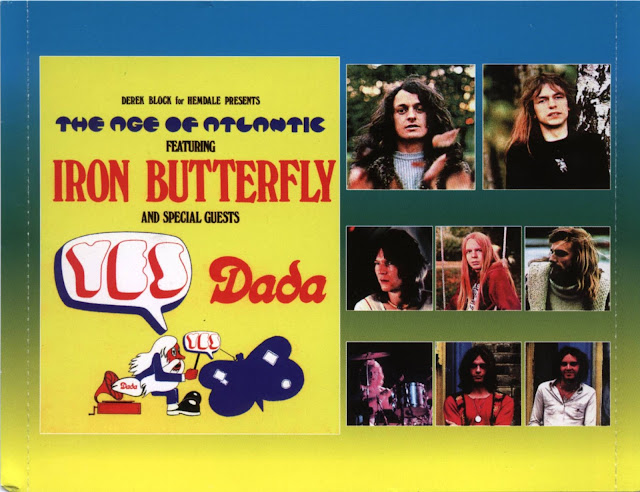
1971- BBC Sounds Of The 70s

1971-04-12 - BBC Sounds Of The 70s


1.01 The Clap (2.00)
1.02 Classical Gas (1.29)


ENLACE

https://mega.nz/file/6dR2jaBR#AAAAAAAAAACW0dRaQDxgFQAAAAAAAAAAltHUWkA8YBU


1969- Looking Around (The Early Years Label)

1969-01-01 - Looking Around (The Early Years Label)

BBC Live Sessions recordings 1969-1970:
     1.01 Everydays (5.04)
     1.02 Sweetness (4.05)
     1.03 Something's Coming (7.44)
     1.04 Sweet Dreams (3.24)
     1.05 Then (4.16)
     1.06 Looking Around (3.41)
     1.07 America (14.54)
     1.08 Starship Trooper (8.28)

Beat Club, Bremen, 1971-01-28:
     1.09 No Opportunity Necessary, No Experience Needed (4.15)

B-side of 'Sweetness' 1969:
     1.10 Something's Coming (7.02)


ENLACES

https://mega.nz/file/bcBUiKzY#AAAAAAAAAADxvWVC_OqvdAAAAAAAAAAA8b1lQvzqr3Q

1968 - Moments - BBC Recordings 1968-1973

1968-01-01 - Moments - BBC Recordings 1968-1973

BBC, 1973-11-01:
     1.01 The Revealing Science Of God (20.59)

Mabel Greer's Toy Shop, BBC Session March 1968:
     1.02 Beyond & Before (3.52)
     1.03 Images Of You And Me (3.58)
     1.04 Jeanetta (3.08)

BBC, 1969-01-07:
     1.05 Dear Father (5.29)

BBC, 1969-08-03:
     1.06 Beyond & Before (London 1969-08-03) (4.08)

BBC, 1970-04-07:
     1.07 For Everyone (9.40)

Sheffield, 1969-02-24:
     1.08 Dear Father (5.45)
     1.09 Eleanor Rigby (3.27)
     1.10 I See You (7.53)

B-side of rare single by Topo D'bill ('Legs' Larry Smith):
     1.11 Witchi-Tai-Po (3.27)


ENLACES

https://mega.nz/file/eFYm3a7C#AAAAAAAAAAAPZrApVLtkTgAAAAAAAAAAD2awKVS7ZE4


1974 - Atlantis 30th Anniversary Edition - Atlanta

Atlantis The Omni

Atlanta, GA

November 30, 1974

The Thirtieth Anniversary Edition


CD 1


1.01 Firebird Suite (1.46)

1.02 Sound Chaser (9.56)

1.03 Close to the Edge (19.30)

1.04 To Be Over (9.28)

1.05 The Gates of Delirium (22.33)


CD 2

2.01 And You And I (10.32)

2.02 Ritual (25.21)

2.03 Roundabout (8.44)


Yes:

Alan White

Chris Squire

Jon Anderson

Patrick Moraz

Steve Howe


Recorded, mastered, and remastered by TheTooleMan 1975, 2001 and 2004


Now that this recording has survived 30 years, I will try to document what I remember about the experience of the concert and making the recording, and the work I did on the tapes in the subsequent months and years and decades.


The Concert


The Omni in Atlanta is not a particularly great place to go to enjoy music. It is large, and holds lots of people. Yes was well-started on its arena-filling phase, and this show was early in their third tour as a headline act. The Omni was full, as I recall.


I bought the tickets late and wound up with nosebleed seats for my friends Mark, Barry, and me. From our seats we could see the entire stage, but it was pretty distant, and we used binoculars to see up close. At best, we could see two band members at the same time through the lenses. The large mechanical monsters on either side of the stage were both an aid and a distraction – they gave the audience more to look at from the distance, but they also lent the show a circus-like quality. Their wobbly motions and rounded design reminded me of characters in a Burger King commercial. These were not the same creatures that you see on-stage in the QPR video or any of the photos in the YesYears set, and perhaps they broke down and were replaced early on in the tour.


Moraz was new to me. As a die-hard Wakeman fan, Moraz had a lot to prove, and overall I thought he was a poor substitute, especially during the older songs where he played his own improvisations instead of the original keyboard parts.


 The Recording


I carried a Panasonic mono portable cassette recorder with automatic level control and an ElectroVoice microphone into the Omni in an army knapsack I purchased at a surplus store. I stashed the knapsack under a navy pea coat carried under my arm. It got some looks by the staff of the arena, but no inspections. The microphone was borrowed from a defunct radio station where Barry and I had worked. It probably accounts for the modicum of fidelity I was able to capture with this otherwise mediocre recorder.


I started out with the microphone in my hand, but later put it in the knapsack under my seat. This probably accounts for the reduced amount of conversation during the middle parts of the show.


I brought three BASF normal-bias cassettes with me in the knapsack. After Close to the Edge, I flipped the tape over and started rewinding. I was still fumbling with the machine when Jon made his first comments and introduced To Be Over. Only when Steve started playing the opening melody did I realize I needed to start taping again. This is why several seconds of the introduction of To Be Over are missing from the recording. I also missed Jon’s introduction of And You And I while changing from the first to second tape. I flipped sides of the second tape during the applause for the encore, so no music was lost, but the ovation was longer than the recording suggests.


Occasional flanging can be heard in some parts of the music, particularly in The Gates of Delirium and Ritual. This was produced by deliberately moving the microphone in a circular motion. It seemed like a good idea at the time, for any number of reasons.


We were pretty quiet most of the time, but you can hear me asking Barry, “Want a toke?” at 6:42 into Sound Chaser (I was shocked that he replied “Nah”). That’s me gasping at the end of the Firebird Suite, when the drums blasted like gunshots through the Omni. I ask Mark if I can see his binoculars during the introduction of To Be Over, and Barry talks about his camera and light meter ad nauseum during And You And I. Eventually the guys went for a closer look during Ritual. There are some bits of conversation from the people in front of me, but nothing too distracting or intelligible.


The sound in The Omni was not good. Bass notes rang off the ceiling, particularly some harmonic frequencies. You can hear this effect in the recording, where the dominating sound comes from the bass. When these peaks occurred, the automatic level control kicked in and the overall audio level dropped, leaving the bass very prominent.


The middle “war” section of The Gates of Delirium was painfully loud, with Jon’s crashing and bashing effects blasting off the ceiling. From where I sat, it looked like he was breaking glass in a garbage can and pounding on other objects. It was incredibly violent, and I think the recording captures most of this quality. Later performances do not seem to be this extreme.


 The Mastering


Most of the mastering of the recording was done in the first half of 1975 at the University of Georgia, both in my dorm room and the radio production studios of the Grady School of Journalism. Studio C was the largest, with room for a small orchestra or 25 students. It had an RCA two-track stereo recorder and an Ampex full-track mono recorder, mounted in a rack, another Ampex full-track in a stand with wheels, and an RCA board of older vintage, even for 1975. I patched the Panasonic recorder into the board and copied the cassettes onto the two reel-to-reel machines. I split up the tapes by track and cut out unwanted talking, added a few effects, and ran the output through the Blonder-Tongue equalizer Barry had liberated from a radio station junk pile. It was an old tube model with about 8 bands and a tube for each one, in a rack-ready configuration – in other words, a face plate and chassis, but no cabinet. The equalizer output ran into my Tandberg 3000X quarter-track stereo tape deck. I lugged the equalizer, the Tandberg, the Panasonic, a bundle of cables, and a copy of YesSongs in and out of my dorm room, down three flights of stairs, and into my VW Beetle. I drove to the “J-school” studios, lugged the equipment out of the car, up more stairs, and down a long hall to the basement studio. At the end of my allotted time in the studio, I retraced all my steps, equipment in tow. I repeated this process numerous times during the spring quarter of 1975.


In my dorm room, I used the Panasonic cassette recorder to process the signal from one track of the tape coming from the Tandberg, which was playing the product of my day at the studio. I would EQ the signal to favor the high end, and the Panasonic’s automatic level control would pull up the low-volume passages that the excessive bass had produced. This output was bounced back to the other track of the tape. I would then reverse the EQ and play it back again through this same signal path, hoping to fix the problems the previous loop had created. Even though I did this numerous times, I didn’t pick up much tape hiss – this speaks to the quality of the Tandberg, I guess. I believe I did pick up distortion from the equalizer, though, and the multiple passes probably compounded it.


I cross-faded the introductory sound effects from the YesSongs version of Close to the Edge with the ones from my recording to replace a lot of talking picked up by the tape. Sometime in the history of the tape, I hit the record button during Total Mass Retain and wiped out less than a second of the signal; I used an echo and some reverb to fill the hole. I went overboard with echo on this track. The monitors in studio C were at the other end of the room and did not reveal how much I put into the mix. The result is muddier than I would have liked in hindsight. Echo was also used in Ritual to cover some tape defects, most obviously in the passage before the bass solo, starting around 9:45.


The tape flanging effect from 2:30 to 2:48 in Sound Chaser is a product of the two recorders in studio C. The RCA deck ran just enough slower than the Ampex that it was easy to make a successful phasing sound on Moraz’ soaring Mellotron passage.


There is a cartoon sound effect buried in the mix during the Ritual drums. A tape cartridge with the sound was in studio C, and I added it on a whim. Other bizarre sounds were coming from the stage, but this was the only one I added myself. Listen carefully for it.


Ambient audio was mixed over the middle guitar bridge of And You And I, where Barry carried on about the lighting and photo opportunities. I cross-faded in and out of a couple of remarks made by Barry and me in Gates and Ritual, and made a splice at the end of the bass solo in Ritual to handle an abrupt change in EQ. With the reverb in The Omni, it was hard to hear much of anything going on in the bass solo even as it was happening. The drum part of Ritual is probably the least effected part of the entire recording – it seemed quite fine in its original form. Roundabout is also quite unprocessed, as the noise levels were so high that the poor Panasonic had all it could do to keep the audio below total distortion. The entire audience was standing and clapping during Roundabout, and I don’t recall whether I was holding the microphone or if it was stowed under my chair at this point.


At some point in the summer of 1975, I decided to shelve the project. Being in an “endless loop” of reprocessing the audio, and not being able to make further improvements, I ran some of the less-processed tapes through the equalizer one last time, recorded the output on track one of a BASF reel at 7-1/2 ips, and put everything away. To make the show fit on the reel, I moved To Be Over to the beginning of side two, followed by And You And I. During this dubbing session, as happened all too often in my efforts, one of the tubes in the old EQ unit emitted a high-pitched squeal. The decrepit device had ruined many takes with its unwelcome audio additions, forcing me to restart the process from the beginning and waste hours of time. At one point I whacked the EQ unit with my hand – you can hear this as a small burst of static during the ending minutes of Ritual. This apparently was exactly what was needed, as it did not squeal again during the rest of the final copying session.


I thought that some day I would be able to process the recording with the equipment I needed (which may not have existed at the time) to fix the audio distortion and abrupt level changes caused by the automatic level control. I had no idea it would be over 25 years until that came about.


 The Remastering


In 2001, after acquiring a Dell PC, Sound Forge 5, and a used Sony TC-366 reel-to-reel tape recorder, I started work on the remaster.


The tape was in good condition, having been stored in its original plastic case and the air-tight inner plastic shell in an air conditioned environment for over 25 years. The first playback revealed a bad 60 Hz hum throughout the recording, another artifact of the old tube equalizer. Volume levels were consistent, but some spots remained where the loud bass had overpowered the rest of the audio signal. There were no drop-outs or other signs of deterioration in the playback of the reel.


I used Sonic Foundry’s Paragraphic Equalizer to kill the 60 Hz hum, and its Multi-band Dynamics plug-in to divide the audible spectrum into four bands and apply compression to each. This allowed me to bring up the part of the music that had been smothered by the loud bass and midrange. After this processing, I went through the entire recording in Sound Forge, revamping the audio levels frame by frame to get rid of the remaining abrupt volume changes. Pitch was corrected in spots where the RCA deck of Studio C played back more slowly than the Ampex. The final output was divided into tracks, compressed with SHN, and distributed through YesSwap.


In 2004, I started with the 2001 remaster and reprocessed the frequency bands with Sony Sound Forge 7, adding additional compression and hand-tuning the levels. Sony Acoustic Mirror and Multi-tap Delay processing was added to give stereo depth to the audio. It now more closely recreates the audio experience in the Omni on that Sunday after Thanksgiving, 1974.


Final Thoughts


I still enjoy listening to this tape, and the images it invokes are still vivid. I toyed with a Dolby 5.1 mix of the program, but decided it would take too long with my obsolete PC. The lack of a surround monitor would make it a blind effort. Maybe that will be possible for the 35th or 40th anniversary edition.


Had I anything to do over, I would have kept the original recording on the cassettes, or dubbed them in their raw form onto a full-track reel before erasing them. But having the raw tapes made me nervous – I was afraid I would get “busted” by the RIAA or the Yes Police, and in order to destroy the evidence, I bulk erased the cassettes. I still have the tapes themselves, but their mechanisms broke and the tape wore out years ago; if I had kept the original Yes recordings, they would not play today. At least I was able to reason through my paranoia sufficiently to keep a final copy of the recording.


But what the hell... thirty years later, at least I still have the recording and someone to share it with!

 November, 2004


ENLACE

https://mega.nz/file/fAB2XK4J#AAAAAAAAAABTh4MbEyCQngAAAAAAAAAAU4eDGxMgkJ4


1967 1978 - YesSessions

YesSessions (3cds)

The Syn, first single 1967:
     1.01 Created By Clive (2.27)
The Syn, B-side of 'Created By Clive':
     1.02 Grounded (2.20)
The Syn, second single 1967:
     1.03 Flowerman (2.32)
The Syn, B-side of 'Flowerman':
     1.04 Fourteen Hour Technicolour Dream (2.55)

Mabel Greer's Toy Shop, BBC Sessions March 1968:
     1.05 Beyond And Before (3.49)
     1.06 Images Of You And Me (3.58)
     1.07 Jeanetta (3.04)

Johnnie Walker Show, 1969-06-04:
     1.08 Looking Around (3.51)

Mike Harding Show, 1970-04-07:
     1.09 For Every One (9.38)

Mike Harding Show, 1970-10-20:
     1.10 America (15.52)

Göteborg, 1971-01-24:
     1.11 I've Seen All Good People (7.32)
     1.12 Astral Tarveller (7.48)
     1.13 Everyday (11.11)

--------------

København, 1971-01-25 - Jam with Iron Butterfly:
     2.01 Bye Bye Goodbye Baby (10.57)

Beat Club, Bremen, 1971-01-28:
     2.02 Yours Is No Disgrace (10.42)
     2.03 I've Seen All Good People (2.32)

Top Of The Pops, BBC, 1971-04-01:
     2.04 Starship Trooper (8.52)

Sportpalast, Berlin, 1971-06-05:
     2.05 The Clap (6.02)
     2.06 Perpetual Change (11.47)
     2.07 America (17.51)
     
---------------

Advision Studio, London - Demo, September 1971:
     3.01 Roundabout (7.50)

Crystal Palace, London, 1971-07-31
     3.02 I've Seen All Good People (7.13)

Fragile Tour, October 1971:
     3.03 The Fish
          Heart Of The Sunrise
          Steve Solo (2.02)

Hempstead, 1971-10-03 (from BBC):
     3.04 I've Seen All Good People
          Perpetual Change
          Long Distance Runaround
          Mood For A Day
          Yours Is No Disgrace (14.53)

Bob Harris Show, 1973-11-01:
     3.05 The Revealing Science Of God (20.56)

Tormato promos, different versions:
     3.06 Don't Kill The Whale (3.19)
     3.07 Madrigal (2.55)
     3.08 On The Silent Wings Of Freedom (7.54)


ENLACES

https://mega.nz/file/7VY2QIKD#AAAAAAAAAACwVwIkkLMO4AAAAAAAAAAAsFcCJJCzDuA
https://mega.nz/file/uUYQyYpK#AAAAAAAAAADXQWTUAYFp0QAAAAAAAAAA10Fk1AGBadE
https://mega.nz/file/TARWmCTL#AAAAAAAAAAAl00xu7EVMqwAAAAAAAAAAJdNMbuxFTKs
https://mega.nz/file/zFAWna4S#AAAAAAAAAABmi9pcvh58OQAAAAAAAAAAZovaXL4efDk
https://mega.nz/file/WZZGUSpT#AAAAAAAAAAB0F46_xiBSMQAAAAAAAAAAdBeOv8YgUjE

1963-1970 - Before The Birth Of Yes

Before The Birth Of Yes

Pre-YES Tracks 1963-1970. 
Pre-YES Studio recordings by various members

Disc 1

Happy Magazine (w/ Alan White)
01 - Who Belongs To You
02 - Beautiful Land. Federals (W/ Tony Kaye)
03 - Brazil
04 - On A Persian Market
05 - The Climb
06 - Dance With A Dolly
07 - Boot Hill
08 - Keep On Dancin’ With Me
09 - Marlena
10 - Please Believe Me
11 - Twilight Time
12 - Lost And Alone
13 - Bucketful Of Love
13 - Leah. 

The In Crowd (W/ Steve Howe)
15 - Why Must They Criticize?
16 - I Don’t Mind. 

Keith West (W/ Steve Howe)
17 - Engel Fallen Night Vom Himmel
18 - Shy Boy. 

The Warriors (W/ Jon Anderson)
19 - You Came Along

Hans Christian (Jon Anderson)
20 - Sonata Of Love
21 - Mississippi Hobo

Disc 2

Tomorrow (W/ Steve Howe)
01 - Revolution
02 - Three Jolly Little Dwarfs

Winston’s Fumbs (W/ Tony Kaye)
03 - Real Crazy Apartment
04 - Snow White

Syndicats (W/ Steve Howe)
05 - Maybelline
06 - True To Me
07 - Howlin’ For My Baby
08 - What To Do
09 - On The Horizon
10 - Crawdaddy Simone *

Dib Cochrane & The Earwigs (W/ Rick Wakeman)
11 - Oh Baby
12 - Universal Love

Paul Williams Set (W/ Alan White)
13 - My Sly Sadie
14 - Please Stop The Wedding

Happy Magazine (W/ Alan White)
15 - Satisfied Street
16 - Do Right Woman Do Right Man

SYN (W/ Chris Squire & Peter Banks)
17 - Created By Clive
18 - Grounded

Tomorrow (W/ Steve Howe)
19 - My White Bicycle
20 - Claramount Lake

Yes
21 - For Everyone

* = "Crawdaddy Simone" was recorded before Steve Howe joined the Syndicats. The guitarist on the recording is Ray Fenwick.

Before The Birth Of Yes es una colección de material de miembros de Yes grabada por bandas en las que estuvieron anteriormente. Lanzamientos como este son Nuggets de temática limitada que sirven no solo para presentar música de los músicos que han estado en Yes antes de que se vuelvan populares , pero también de reunir para recolectar material raro y de otro modo inalcanzable. Muchas de estas canciones fueron emitidas en singles por los principales sellos discográficos que han caído en la oscuridad, pero al escucharlas se aprecia lo que se escuchaba en la máquina de discos en Inglaterra a mediados de los años sesenta.

Cuarenta años después, es fácil pensar que todas las personas que escucharon fueron The Beatles y The Stones, pero obviamente había mucho más en las listas de éxitos y más abajo que se puede dar otra evaluación crítica. Dado que Yes ha tenido tantos miembros, hay un océano de material para elegir y ha habido varios lanzamientos, tanto oficiales como no oficiales, con un tema similar. Highland lanzó The Goddess Of Mercy (HL405 / 406) en 1999. Highland quería enfatizar a Jon Anderson y Rick Wakeman más que a Seymour y presentar más de sus primeros singles. Seymour tiene más canciones relacionadas con Alan White, Tony Kaye y Chris Squire con una buena dosis de sencillos de Steve Howe.

Las dos primeras pistas son singles inéditos de Happy Magazine, una banda que Alan White tocó antes de Plastic Ono Band entre 1968-1969. "The Beautiful Land" es su versión de la canción de la obra The Roar Of The Greasepaint ... The Smell Of The Crowd y esta canción es bien conocida por los fanáticos de Yes como "The Colors Of The Rainbow" cantada en la gira Going For The One en 1977. Esto es seguido por la banda de mediados de los años sesenta de Tony Kaye, The Federals. Se incluye todo su catálogo de la etiqueta Parlophone, incluidas las canciones inéditas. No hay registro de "Brasil", "En un mercado persa", y "Boot Hill" que se lanzó, lo cual es una pena ya que estas pistas son brillantes.

Los tres son instrumentales y son un intento temprano de una banda británica que toca música sudamericana y de Medio Oriente. "The Climb" y "Dance With A Dolly" se estrenó en Parlophone en enero de 1964, "Marlena" / "Please Believe Me" en mayo de 1964, "Twilight Time" / "Lost and Alone" en octubre de 1964 y "A Bucketful Of Love ”/“ Leah ”en agosto de 1965. Estas canciones son todas baladas de nivel medio y pop de sonido seguro cuya característica más importante es ser inofensivo. Seymour utilizó muy buenas copias del vinilo con un mínimo ruido de superficie. La mayoría de estas pistas no se incluyeron en Goddess Of Mercy y hacen su debut en discos compactos aquí.

The In Crowd fue la segunda banda de Steve Howe (después de The Syndicats) que estuvo activa entre 1965 y 1967. Lanzaron tres sencillos para Parlophone pero solo uno está incluido en este lanzamiento. "¿Por qué deben criticar?" / "No me importa" fue publicado en noviembre de 1965 y es una puñalada interesante en la psicodelia. La primera canción, especialmente, es similar en tema a The Who’s "My Generation" sin la actitud. "Things She Said", "Stop Wait A Minute", "You're On Your Own" no están presentes en este lanzamiento pero están en Sons Of Olias (TDR-063) en la etiqueta barata de Tendolar junto con "Why Must The Criticize" ?

"Engel Fallen Night Vom Himmel" y "Shy Boy" es el primer sencillo de Keith West, el cantante de Tomorrow que intentó una carrera en solitario. El ex compañero de banda Steve Howe estuvo disponible para ayudar y tocar la guitarra, pero el sencillo no fue a ninguna parte y tampoco lo hizo la carrera de West. Las últimas tres pistas en el primer disco cubren la carrera de Jon Anderson antes de unirse a Sí. "You Came Along" de The Warriors fue lanzado con el respaldo de "Don't Make Me Blue" en 1964. El lado B no está incluido en esta colección, lo cual es desafortunado ya que fue un grupo original escrito por el bajista David Foster que fue para ayudar a escribir "Sweet Dreams" y "Time And A Word" para los primeros Sí. Decca incluyó "You Came Along" en la colección de 1974 Hard Up Heroes.

El lado B está incluido en la colección Highland, al igual que la mayoría de las grabaciones en solitario de Anderson como Hans Christian Anderson ("Never My Love" / "All Of The Time" y "Out Of My Mind" / "Someone In Heaven Knows"). Parlophone lanzó dos singles y Seymour incluye el segundo, "Sonata Of Love" / "Autobiography Of A Mississippi Hobo" lanzado en mayo de 1968. La calidad de sonido de estos dos es justa en el mejor de los casos y suena mucho mejor en otros lanzamientos. El segundo disco de Before The Birth Of Yes comienza con el segundo sencillo lanzado por Tomorrow, la banda de Steve Howe después de The In Crowd. "Revolution" / "Three Jolly Little Dwarves" fue lanzado en Parlophone en septiembre de 1967.

El primero es un llamado de amapola a la anarquía y el segundo es una canción extraña sobre los enanos perseguidos por un gigante. Jimmy Winston y sus reflejos (también conocido como Winston’s Fumbs) fue la banda en la que Tony Kaye estuvo después de The Federals y emitió dos singles en 1967. "Real Crazy Apartment" / "Snow White" fue el segundo de los dos lanzado en julio de 1967 en RCA. En estas grabaciones, Kaye comienza a desarrollar su conocido sonido Hammond Organ que se perfeccionó a principios de los años setenta con Yes y Badger.

Las siguientes seis canciones representan toda la producción grabada de la primera banda de Steve Howe, The Syndicates, que tocó entre 1963 y 1965.

"Maybellene" / "True To Me" se publicó en marzo de 1964 en Columbia, "Howlin 'With My Baby" / "What To Do" en enero de 1965 y "On The Horizon" / "Crawdaddy Simone" en septiembre de 1965. Lo siguiente dos canciones son lanzadas por el misterioso Dib Cochran & The Earwigs: "Oh Baby" / "Universal Love" (Bell BLL.1121) en agosto de 1970. Dib Cochran & The Earwigs fue un seudónimo para una banda compuesta por Marc Bolan, David Bowie (en saxo), Rick Wakeman, Mickey Finn y Tony Visconti. El single no trazó y se deslizó en la oscuridad.

‘Oh Baby’ aparece en la compilación australiana Bolan 3LP 20th Century Boy (EMI MARC 1), mientras que ambas pistas están incluidas en la caja de contrabando 4LP T. Rex - A History (en LP1, etiquetada como The Wizard). Esta podría ser la primera versión de estas canciones en disco compacto y es un verdadero placer. El resto de este título se compone de pistas de The Syn y los otros singles de Tomorrow y Happy Magazine. La canción "For Everyone" de Sí completa el conjunto que se ha lanzado muchas veces antes e incluye un lanzamiento oficial en Beyond & Before. La portada presenta un embrión en desarrollo con células en división que recuerdan la presentación de diapositivas durante "Close To The Edge" durante la película Yessongs. Esta es una buena pieza compañera para Goddess Of Mercy and Sons Of Olias que suena muy bien y se recomienda.

Before The Birth Of Yes is a collection of material of Yes members recorded by bands they were previously in. Releases like this are a narrowly themed Nuggets which serve the purpose not only of presenting music by the musicians who have been in Yes before they become popular, but of also gathering to gather rare and otherwise unobtainable material. Many of these songs were issued on singles by major record labels which have fallen into obscurity, but listening to them one gains an appreciation of what was playing on the jukebox in England in the mid sixties. 

Forty years on it is easy to think that all people listened to were The Beatles and the Stones, but there obviously was much more on the pop charts and below which can be given another critical evaluation. Since Yes have had so many members there is an ocean of material to choose from and there have been several releases, both official and unofficial, with a similar theme. Highland released The Goddess Of Mercy (HL405/406) in 1999. Highland wanted to emphasize Jon Anderson and Rick Wakeman more than Seymour and present more of their early singles. Seymour has more Alan White, Tony Kaye and Chris Squire related songs with a healthy dose of Steve Howe singles.

The first two tracks are unreleased singles from Happy Magazine, a band Alan White drummed for before the Plastic Ono Band between 1968-1969. “The Beautiful Land” is their cover of the song from the play The Roar Of The Greasepaint…The Smell Of The Crowd and this tune is well known to Yes fans as “The Colours Of The Rainbow” sung on the Going For The One tour in 1977. This is followed by Tony Kaye’s mid sixties band The Federals. Their entire catalogue from the Parlophone label is included including unreleased songs. There is no record of “Brazil”, “In A Persian Market”, and “Boot Hill” being released which is a shame since these tracks are brilliant. 

All three are instrumentals and are an early attempt of a British band playing South American and Middle Eastern music. “The Climb” and “Dance With A Dolly” was released on Parlophone in January 1964, ” Marlena” / “Please Believe Me” in May 1964, “Twilight Time” / “Lost And Alone” in October 1964, and “A Bucketful Of Love” / “Leah” in August 1965. These songs are all mid-level ballads and safe sounding pop whose biggest characteristic is being inoffensive. Seymour used very good copies of the vinyl with minimal surface noise. Most of these tracks were not included on Goddess Of Mercy and make their compact disc debut here. 

The In Crowd was Steve Howe’s second band (after The Syndicats) which was active between 1965 to 1967. They released three singles for Parlophone but only one is included on this release. “Why Must They Criticize?” / “I Don’t Mind” was issued in November 1965 and is an interesting stab at psychedelia. The first song especially is similar in theme to The Who’s “My Generation” without the attitude. “Things She Said”, “Stop Wait A Minute”, “You’re On Your Own” are not present on this release but are on Sons Of Olias (TDR-063) on the cheap Tendolar label along with “Why Must The Criticize?” 

“Engel Fallen Night Vom Himmel” and “Shy Boy” is the first single by Keith West, the singer for Tomorrow who tried a solo career. Ex-bandmate Steve Howe was on hand to help and play guitar but the single didn’t go anywhere and neither did West’s career. The final three tracks on the first disc cover Jon Anderson’s career before joining Yes. The Warriors’ “You Came Along” was released backed by “Don’t Make Me Blue” in 1964. The B-side isn’t included in this collection which is unfortunate as it was a group original written by bassist David Foster who went on to help write “Sweet Dreams” and “Time And A Word” for the early Yes. Decca included “You Came Along” on the 1974 collection Hard Up Heroes. 

The B-side is included on the Highland collection as are most of Anderson’s solo recordings as Hans Christian Anderson (“Never My Love” / “All Of The Time” and “Out Of My Mind” / “Someone In Heaven Knows”). Two singles were releases by Parlophone and Seymour includes the second, “Sonata Of Love” / “Autobiography Of A Mississippi Hobo” released in May 1968. The sound quality of these two is fair at best and sounds much better on other releases. The second disc of Before The Birth Of Yes begins with the second single release by Tomorrow, Steve Howe’s band after The In Crowd. “Revolution” / “Three Jolly Little Dwarves” was released on Parlophone in September 1967. 

The former is a poppy call for anarchy and the latter is a bizarre song about the dwarves being chased by a giant. Jimmy Winston And His Reflections (aka Winston’s Fumbs) was the band Tony Kaye was in after The Federals and issued two singles in 1967. “Real Crazy Apartment” / “Snow White” was the second of the two released in July 1967 on RCA. On these recordings Kaye begins to develop his well-known Hammond Organ sound that was perfected in the early seventies with Yes and Badger. The following six songs represent the entire recorded output of Steve Howe’s first band The Syndicates who played between 1963 and 1965. 

“Maybellene” / “True To Me” was issued in March 1964 on Columbia, “Howlin’ With My Baby” / “What To Do” in January 1965 and “On The Horizon” / “Crawdaddy Simone” in September 1965. The following two songs are a release by the mysterious Dib Cochran & The Earwigs: “Oh Baby”/”Universal Love” (Bell BLL.1121) in August 1970. Dib Cochran & The Earwigs was a pseudonym for a band comprising of Marc Bolan, David Bowie (on sax), Rick Wakeman, Mickey Finn and Tony Visconti. The single did not chart and has slipped into obscurity. 

‘Oh Baby’ is featured on the Australian Bolan compilation 3LP 20th Century Boy (EMI MARC 1), whereas both tracks are included on the bootleg 4LP box T. Rex – A History (on LP1, labeled The Wizard). This just might be the first release of these songs on compact disc and are real treat. The rest of this title is comprised of tracks from The Syn and the other singles by both Tomorrow and Happy Magazine. The Yes track “For Everyone” rounds off the set which has been released many times before including an official release on Beyond & Before. The cover art features a developing embryo with dividing cells reminiscent of the slide show during “Close To The Edge” during the Yessongs movie. This is a good companion piece to Goddess Of Mercy and Sons Of Olias that sounds very good and is recommended.


ENLACES

https://mega.nz/file/7IB01aJS#AAAAAAAAAAAm8ee9dSAEHwAAAAAAAAAAJvHnvXUgBB8


miércoles, 27 de mayo de 2020

1991 - Unearthed - Live and studio outtakes - 1970-1991

1991-01-01 - Unearthed - Live and studio outtakes - 1970-1991

1.01 The Clap (3.49)
1.02 I've Seen All Good People (8.07)
1.03 Chris Squire messes up on WJFK (0.15)
1.04 Easier Said Than Done ("3 Ships" Studio Rehearsal) (6.24)
1.05 Lift Me Up (Rabin Lead Vocals) (7.21)
1.06 Untitled (0.43)
1.07 Lift Me Up ~ Yours Is No Disgrace (Rehearsal Take) (7.09)
1.08 Hear It (2.06)
1.09 Turn Of The Century (Steve Howe Solo) (2.36)
1.10 After The Storm (4.09)
1.11 Golden Age (2.16)
1.12 Coca-Cola Commercial (1.00)
1.13 Jon Anderson Radio Snippet (0.11)
1.14 Richard (3.49)
1.15 Change We Must (9.40)
1.16 Quartet (Snippet) (0.09)
1.17 Quartet (9.49)


ENLACE

https://mega.co.nz/#!cKBmFSSI!AAAAAAAAAACT2Wn10IodzAAAAAAAAAAAk9lp9dCKHcw